A concert robot may spend more time behind the curtain than in front of it. The clearest uses are moving gear, sending cameras into hard-to-reach places, and handling repeat tasks that can slow a show.
This is a practical look at those uses for a concert producer or venue manager. No evidence pack names a working system, price, or live deployment, so the limits matter as much as the promise.
Quick read
- Backstage robots could move cases, cables, and set pieces between storage and the stage.
- Robotic cameras could add moving shots without placing a camera operator in every position.
- A live show still needs people for safety calls, faults, timing, and last-minute changes.
Moving gear backstage
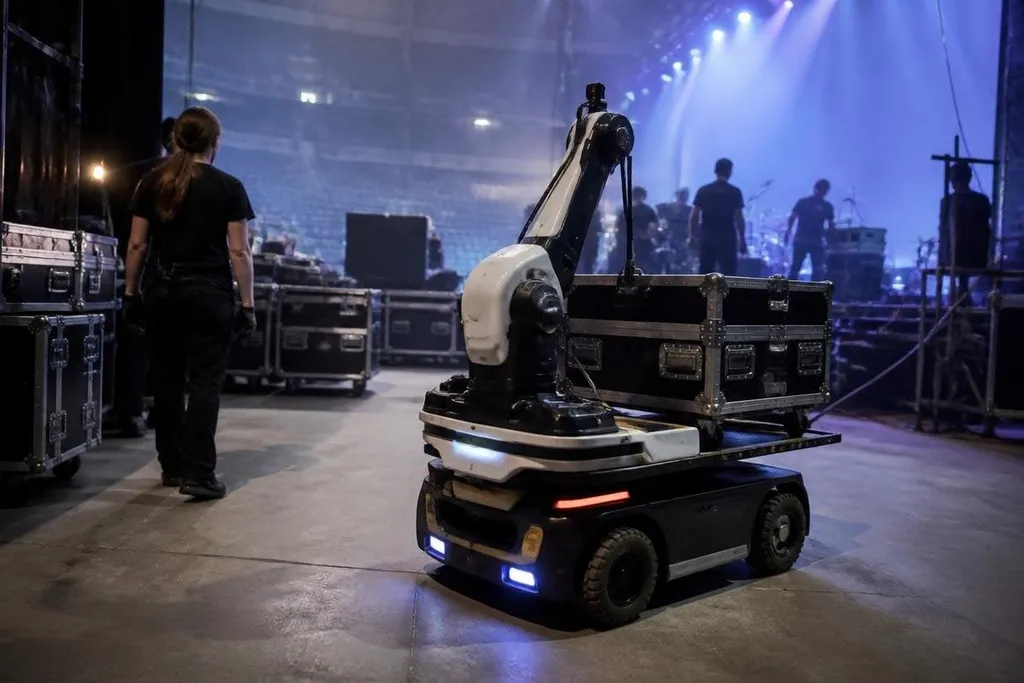
A mobile robot could carry equipment between a loading area, storage room, and stage entrance. It would need a mapped route, obstacle sensors, and a safe way to stop when a person steps into its path.
That work sounds plain, which is why it may be a better starting point than a robot performer. A repeated trip can be planned and checked before the doors open.
The system still has to deal with ramps, loose cables, tight corridors, changing cases, and people walking in every direction.
Payload matters here. A robot rated for small boxes won't replace a cart carrying amplifiers or lighting gear. Any proposal should name the payload in kilograms, the floor surface it can cross, the turning space it needs, and its battery runtime.
Cameras and stage movement
A robotic camera arm could repeat a programmed move during a song. A mobile camera could travel along a marked route near the stage, giving the production team another angle without adding a fixed platform.
The useful question is control. Can an operator change the path during a live set? Can the robot stop without swinging into a performer? Does the camera keep recording if the network connection drops?
Robot arms also bring a physical hazard. Their reach and speed need limits around performers, crew, and audience members. A demo in an empty room proves very little about a crowded stage with smoke, low light, and fast scene changes.
A stage robot faces a different test when it must hit a cue beside performers, lights, and loud speakers. A dated report from Robot 24 can record its cue timing, control method, stopping distance, and staff role before producers treat it as part of the cast.
Robots as performers
A robot drummer, dancer, or moving stage prop can give a show a repeatable visual effect. That role has a clear artistic reason: the robot does something built around its motion, rather than pretending to be a human singer or musician.
The trade-off is time. A performer can react to a missed cue, a broken cable, or a change in the set list. A programmed robot needs a safe fallback for each case, and the crew must know how to stop it before it creates a risk.
The audience also changes the problem. A machine that works in rehearsal may face phones, bags, spilled drinks, and people crossing a marked area. Until a system has shown safe operation in those conditions, its concert role is unproven.
What robots won't fix
Robots won't remove the need for stagehands, riggers, camera operators, or production managers. They may reduce some carrying and repeat motion, but people still make the calls when timing, safety, and equipment condition collide.
The cost picture is also open. No price, service plan, staffing model, or repair time was supplied for a concert robot here. A venue would need those numbers before comparing a robot with a cart, a lift, or another crew member.
I’d skip a robot performer until the maker can show an uncut live run, a stop procedure, and the repair plan after a fault.
Checks before a concert trial
Use this list before a robot enters a working venue:
- Map the route: mark ramps, doors, cable runs, exits, and people-only areas.
- Set the load: record the heaviest case, its size, and how it gets secured.
- Test the stop: measure how far the robot travels after an operator presses stop.
- Plan the fault: state who takes control if sensors, software, power, or network service fails.
- Count the crew: include setup, monitoring, charging, cleaning, and repair time.
- Run a full rehearsal: test under show lighting with performers and crew present.
A sensible first trial would cover one repeat task in a controlled backstage route. The open question is whether the robot can finish that task safely after the venue stops looking like a test room.